


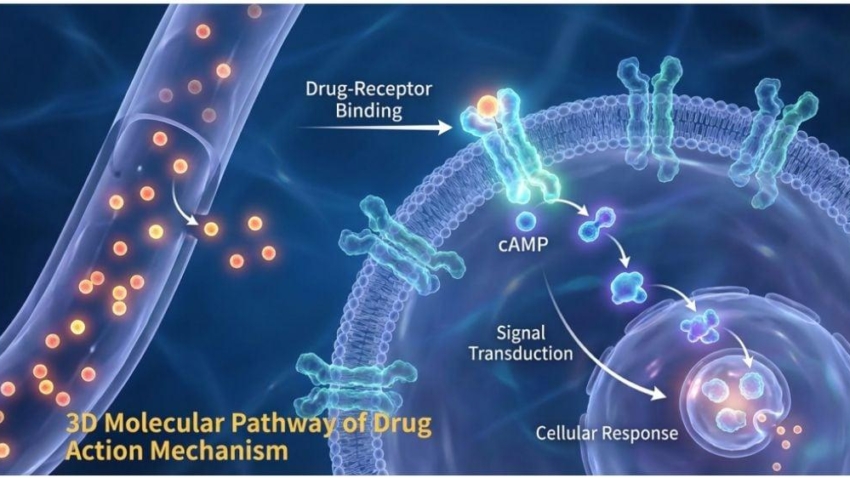
15 Powerful General Pharmacology & Pharmacokinetics Facts Every Medical Student Must Know
General Pharmacology & Pharmacokinetics: The Complete Student Guide


Introduction: General Pharmacology & Pharmacokinetics
General Pharmacology and Pharmacokinetics form the backbone of modern medicine. Every doctor, pharmacist, nurse, dentist, and healthcare professional relies on pharmacological knowledge to prescribe medicines safely and effectively.
Whether treating fever, hypertension, diabetes, infections, or cancer, healthcare professionals must understand how drugs work inside the body and how the body processes these drugs.
General Pharmacology explains the interaction between drugs and living organisms, while Pharmacokinetics focuses on the movement of drugs through the body. Together, these disciplines ensure that medicines are used safely, effectively, and responsibly.
For students preparing for MBBS, BDS, BAMS, BHMS, Nursing, Pharmacy, or competitive examinations such as NEET PG, FMGE, GPAT, and AIIMS, mastering these subjects is essential for academic success and clinical practice.
What is General Pharmacology?
General Pharmacology is the branch of medical science that studies drugs, their actions, mechanisms, therapeutic uses, adverse effects, dosage, toxicity, and interactions with the human body.
It provides the scientific foundation needed before studying drugs related to specific organ systems.
Simply stated:
Pharmacology = Study of Drugs
It answers questions like:
- How does a medicine work?
- Why does dosage matter?
- What causes side effects?
- Why do some medicines interact?
- How are drugs eliminated?
What is Pharmacokinetics?
Pharmacokinetics describes what the body does to a drug after administration.
It follows the famous ADME principle:
- Absorption
- Distribution
- Metabolism
- Excretion
This determines:
- Drug concentration
- Duration of action
- Effectiveness
- Safety
- Toxicity
History of Pharmacology
The history of pharmacology dates back thousands of years.
Ancient Era
- Herbal medicines were used in India, China, Egypt, and Greece.
- Ayurveda documented hundreds of medicinal plants.
- Traditional healers prepared medicines from roots, leaves, flowers, and minerals.
16th Century
Scientific observation replaced superstition.
18th Century
Medicines began to be purified into chemical compounds.
19th Century
Modern pharmacology emerged as laboratories isolated active ingredients such as morphine and quinine.
20th Century
Major discoveries included:
- Antibiotics
- Vaccines
- Insulin
- Chemotherapy
- Steroids
21st Century
Modern pharmacology now includes:
- Gene therapy
- Personalized medicine
- Biotechnology
- Artificial Intelligence in drug discovery
- Nanomedicine
Timeline of Pharmacology
| Year | Development |
|---|---|
| 3000 BC | Herbal medicines documented |
| 1500 BC | Ancient Egyptian medical texts |
| 600 BC | Ayurveda flourished |
| 1800s | Scientific drug isolation |
| 1900s | Antibiotics discovered |
| 1921 | Insulin discovered |
| 1940s | Penicillin widely used |
| 1980s | Biotechnology medicines |
| 2000 onwards | Personalized medicine |
| Present | AI-assisted drug development |
Branches of Pharmacology
General Pharmacology includes several branches:
- Pharmacokinetics
- Pharmacodynamics
- Clinical Pharmacology
- Toxicology
- Chemotherapy
- Pharmacogenomics
- Molecular Pharmacology
- Neuropharmacology
- Cardiovascular Pharmacology
- Endocrine Pharmacology
Pharmacokinetics (ADME)


1. Absorption
Absorption is the movement of a drug from its site of administration into the bloodstream.
Factors affecting absorption:
- Route of administration
- Blood supply
- pH
- Food
- Drug formulation
2. Distribution
Distribution is the movement of drugs through blood to body tissues.
Influencing factors:
- Plasma protein binding
- Blood flow
- Fat solubility
- Organ perfusion
3. Metabolism
Most drugs are metabolized in the liver.
Purpose:
- Convert drugs into water-soluble compounds
- Reduce toxicity
- Facilitate elimination
Important liver enzymes:
- CYP450 enzymes
4. Excretion
Most drugs leave the body through:
- Kidneys
- Urine
- Bile
- Sweat
- Saliva
- Lungs
Routes of Drug Administration
Common routes include:
- Oral
- Sublingual
- Intravenous
- Intramuscular
- Subcutaneous
- Rectal
- Topical
- Inhalational
- Transdermal
Each route has specific advantages and limitations depending on the patient’s condition and the desired speed of action.
Pharmacodynamics
Pharmacodynamics studies:
“What the drug does to the body.”
It explains:
- Drug receptors
- Mechanism of action
- Therapeutic effect
- Side effects
- Toxic effects
Drug Receptors
Major receptor types:
- Enzyme-linked receptors
- Ion channel receptors
- Nuclear receptors
- G-protein coupled receptors
Drug Safety
Safe prescribing includes:
- Correct patient
- Correct drug
- Correct dose
- Correct route
- Correct timing
These “five rights” help reduce medication errors.
Adverse Drug Reactions (ADRs)
Examples include:
- Allergic reactions
- Nausea
- Vomiting
- Liver injury
- Kidney damage
- Skin rashes
- Drug interactions
Reporting ADRs contributes to ongoing medication safety.
Drug Interactions
Drug interactions may occur:
- Drug-drug
- Drug-food
- Drug-herbal
- Drug-alcohol
Examples:
- Grapefruit juice affecting certain medicines.
- Alcohol increasing sedation with some medications.
Importance for Students
Students learn:
- Safe prescribing
- Drug calculations
- Clinical reasoning
- Emergency medicine
- Toxicology
- Rational drug therapy
- Examination preparation
Importance in Daily Life
Pharmacology influences daily life through:
- Safe use of pain relievers.
- Completing antibiotic courses as prescribed.
- Avoiding self-medication.
- Reading medicine labels.
- Understanding vaccine schedules.
- Recognizing adverse effects and seeking timely care.
Importance to Society
Pharmacology supports society by:
- Reducing disease burden.
- Improving life expectancy.
- Enabling effective vaccination programs.
- Advancing chronic disease management.
- Supporting evidence-based healthcare.
- Encouraging rational use of medicines and combating antimicrobial resistance.
Cost of Studying Pharmacology
Approximate costs vary by institution and country.
India (Annual Tuition)
- Government MBBS colleges: ₹20,000–₹2,00,000.
- Private MBBS colleges: ₹8–25 lakh.
- B.Pharm: ₹50,000–₹2 lakh.
- M.Pharm: ₹1–3 lakh.
Hostel & Accommodation (Approximate)
- Government hostel: ₹10,000–₹60,000 per year.
- Private hostel/PG: ₹60,000–₹2,00,000 per year depending on city and amenities.
Students should verify current fees directly with their chosen institution because costs change annually.
Important Facts
- Over half of commonly used medicines undergo significant liver metabolism.
- Kidney function plays a major role in drug elimination.
- Drug dosage often depends on age, body weight, liver function, and kidney function.
- Not all patients respond to medicines in the same way due to genetics and health conditions.
- Therapeutic drug monitoring is important for medicines with narrow safety margins.
Practical Tips for Students
- Master the ADME concept first.
- Create concise flashcards for drug classes.
- Understand mechanisms rather than memorizing facts alone.
- Revise adverse effects and contraindications regularly.
- Solve MCQs and clinical case scenarios.
- Stay updated with current treatment guidelines.
Review Section
Overall Rating: ⭐⭐⭐⭐⭐ (5/5)
Content Coverage: ⭐⭐⭐⭐⭐
Student Friendliness: ⭐⭐⭐⭐⭐
Clinical Relevance: ⭐⭐⭐⭐⭐
Exam Preparation Value: ⭐⭐⭐⭐⭐
Pros
- Foundation for all clinical medicine.
- Helps understand rational prescribing.
- Essential for competitive examinations.
- Improves patient safety.
- Applicable across medical and pharmacy careers.
Cons
- Requires regular revision due to the large volume of drug information.
- Drug recommendations and guidelines evolve over time, making continuous learning necessary.
Significance
General Pharmacology and Pharmacokinetics are significant because they bridge laboratory science with patient care. Understanding how medicines are absorbed, distributed, metabolized, and excreted allows healthcare professionals to choose appropriate drugs, determine correct doses, anticipate interactions, and minimize harm. This knowledge ultimately improves treatment outcomes and supports safer healthcare systems.
Important Points to Remember
- ADME is the cornerstone of pharmacokinetics.
- Pharmacodynamics explains drug effects on the body.
- Dose and route influence therapeutic outcomes.
- Patient-specific factors affect drug response.
- Medication safety is a shared responsibility of healthcare professionals and patients.
Wishing Message
Best wishes to every medical, pharmacy, nursing, and healthcare student! May your dedication to learning pharmacology help you provide safe, compassionate, and effective care to patients. Every concept you master today can contribute to better health outcomes tomorrow. Keep learning, stay curious, and strive for excellence.
Frequently Asked Questions (FAQs)
1. What is pharmacology?
Pharmacology is the scientific study of drugs, their actions, therapeutic uses, side effects, and interactions with living organisms.
2. What is pharmacokinetics?
It is the study of how the body absorbs, distributes, metabolizes, and excretes drugs (ADME).
3. Why is ADME important?
ADME determines the onset, intensity, duration, and elimination of a drug, guiding safe and effective dosing.
4. What is the difference between pharmacokinetics and pharmacodynamics?
Pharmacokinetics describes what the body does to a drug, while pharmacodynamics explains what the drug does to the body.
5. Why do medicines have side effects?
Side effects can occur because medicines may affect multiple tissues or biological pathways beyond their intended targets.
6. Why are drug interactions important?
Interactions can reduce effectiveness or increase the risk of adverse effects, making careful medication review essential.
7. Can genetics influence drug response?
Yes. Genetic differences can alter drug metabolism and effectiveness, which is the basis of pharmacogenomics.
8. Is self-medication safe?
Self-medication may be appropriate only for certain over-the-counter medicines when used as directed. Prescription medicines should be taken only under the guidance of a qualified healthcare professional.
Conclusion
General Pharmacology and Pharmacokinetics are indispensable pillars of healthcare education and practice. They provide the scientific understanding needed to use medicines safely, effectively, and responsibly. By learning the principles of ADME, drug mechanisms, therapeutic effects, and medication safety, students develop a strong foundation for clinical decision-making and patient care.
Beyond examinations, pharmacology shapes everyday life by promoting responsible medicine use, reducing preventable harm, and supporting healthier communities. As medical science continues to evolve with biotechnology, precision medicine, and artificial intelligence, a solid grasp of pharmacology will remain one of the most valuable skills for every future healthcare professional.







Leave a Reply