


7 Powerful Control Your Portions Tips That Can Transform Your Health Today
Control Your Portions: The Complete Guide to Healthier Eating and Better Living

Control Your Portions


Introduction
Control your portions is one of the simplest and most effective ways to improve your health without completely changing the foods you love. Portion control means eating the right amount of food that your body needs instead of eating until you are overly full. In today’s fast-paced world, oversized meals, large restaurant servings, and unlimited buffets have made overeating common.
Learning how to manage portion sizes can help maintain a healthy weight, improve digestion, reduce the risk of chronic diseases, and promote a balanced lifestyle. Unlike strict dieting, portion control focuses on moderation rather than deprivation, making it easier to maintain for life.
Whether your goal is weight management, better heart health, diabetes prevention, or simply feeling more energetic, understanding portion control can become one of your most valuable lifelong habits.
History of Portion Control
The idea of portion control has existed for thousands of years.
Ancient civilizations such as the Greeks and Romans believed moderation was essential for good health. Philosophers like Aristotle promoted balance in all aspects of life, including eating.
Traditional Asian cultures have long practiced eating until approximately 80% full, a concept known in Japan as “Hara Hachi Bu.”
During the twentieth century, industrial food production increased portion sizes significantly. Fast-food restaurants introduced supersized meals, leading to increased calorie consumption.
Modern nutrition science now strongly emphasizes portion control as one of the key strategies for preventing obesity and lifestyle diseases.
Timeline of Portion Control
- Ancient Era: Moderate eating encouraged in traditional societies.
- 400 BCE: Greek physicians recommended balanced meals.
- 1900s: Home-cooked meals generally had moderate serving sizes.
- 1950–1980: Fast-food industry expanded rapidly.
- 1990s: Portion sizes in restaurants increased significantly.
- 2000s: Governments launched healthy eating campaigns.
- Today: Portion control is widely recommended by nutritionists worldwide.
What Does Portion Control Mean?
Portion control means serving yourself an appropriate quantity of food based on your nutritional needs.
It is different from a serving size.
- Serving Size: Standard measurement listed on food labels.
- Portion Size: The amount you actually eat.
For example:
A serving of rice may be one-half cup, but many people unknowingly consume two or three servings in one meal.
Why Portion Control Matters
Controlling portions provides numerous health benefits.
These include:
- Better weight management
- Improved digestion
- Stable blood sugar
- Lower cholesterol
- Reduced obesity risk
- Improved heart health
- Better energy levels
- Less food waste
- Improved eating habits
Interesting Facts About Portion Control
- Large plates often encourage people to eat more.
- Eating slowly naturally reduces portion size.
- Drinking water before meals may reduce overeating.
- Restaurant meals often contain two to four servings.
- Smaller bowls can trick the brain into feeling satisfied.
- Fiber-rich foods increase fullness.
- Protein helps reduce hunger for longer periods.
Signs That Your Portions May Be Too Large
You may be overeating if:
- You feel sleepy after meals.
- You regularly loosen your belt after eating.
- You continue eating even after feeling full.
- You gain weight despite exercising.
- You snack constantly between meals.
Easy Portion Control Methods
Use Smaller Plates
Smaller plates naturally reduce food intake.
Fill Half Your Plate with Vegetables
Vegetables are rich in nutrients while being lower in calories.
Ideal plate:
- 50% vegetables
- 25% protein
- 25% whole grains
Eat Slowly
Your brain needs around twenty minutes to recognize fullness.
Chew thoroughly and enjoy every bite.
Avoid Eating Directly from Packages
Instead of eating chips from the bag, place a small amount in a bowl.
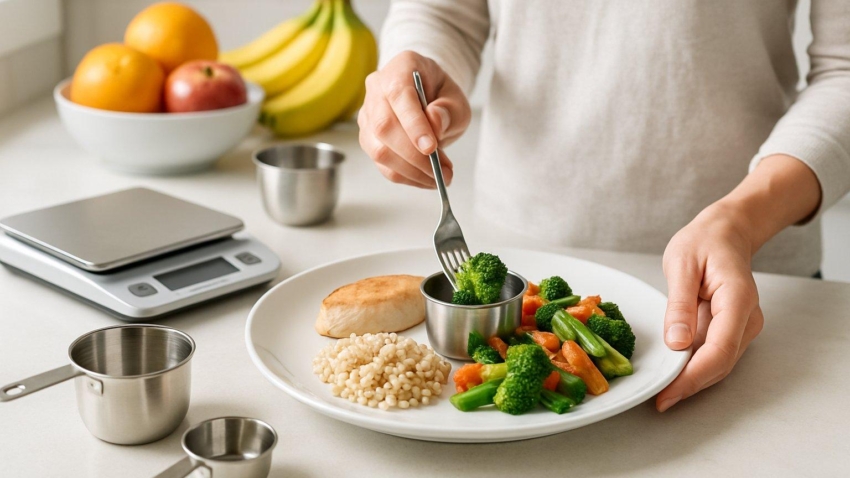
Measure Foods Initially
Use measuring cups until you become familiar with proper serving sizes.
Drink Water Before Meals
Water helps reduce excessive hunger.
Read Nutrition Labels
Food labels help understand serving sizes and calorie intake.
Avoid Emotional Eating
Stress, sadness, and boredom often cause overeating.
Practice mindful eating instead.
Foods That Help Portion Control
Choose foods that increase fullness.
Examples include:
- Oats
- Brown rice
- Lentils
- Beans
- Apples
- Berries
- Eggs
- Fish
- Chicken breast
- Yogurt
- Nuts (in moderation)
- Leafy vegetables
Portion Size Guide
Approximate healthy portions:
- Protein = Palm of your hand
- Rice or pasta = One cupped hand
- Cheese = Two thumb sizes
- Peanut butter = One thumb
- Vegetables = Two handfuls
- Fruit = One fist
These simple hand measurements make portion control easy without weighing food.
Common Portion Control Mistakes
Many people unknowingly make these mistakes:
- Skipping breakfast
- Eating while watching television
- Eating too quickly
- Using oversized plates
- Drinking sugary beverages
- Ordering large restaurant meals
- Mindless snacking
Benefits of Portion Control
Helps Weight Loss
Reducing calorie intake without eliminating favorite foods supports gradual weight loss.
Supports Heart Health
Lower calorie intake reduces unhealthy fat consumption.
Prevents Diabetes
Balanced portions help maintain stable blood sugar.
Improves Digestion
Smaller meals reduce stomach discomfort.
Saves Money
Eating appropriate portions reduces unnecessary grocery expenses.
Importance in Our Life
Portion control teaches discipline and mindful eating.
It encourages healthier family meals.
Children who learn portion control early often develop healthier eating habits as adults.
It also supports long-term disease prevention and improves overall quality of life.
Importance to Society
Healthy communities begin with healthy individuals.
When people practice portion control:
- Healthcare costs decrease.
- Obesity rates decline.
- Food waste reduces.
- Productivity improves.
- Families adopt healthier lifestyles.
- Nutrition awareness increases.
Observance of Healthy Portion Control
Many wellness programs encourage portion awareness through:
- Nutrition education
- Healthy cooking workshops
- School meal programs
- Workplace wellness campaigns
- Community fitness initiatives
- Weight management programs
Important Points to Remember
- Eat slowly.
- Stop eating when comfortably full.
- Use smaller dishes.
- Include vegetables in every meal.
- Drink water regularly.
- Avoid distracted eating.
- Choose nutrient-rich foods.
- Plan meals ahead.
- Read food labels.
- Practice consistency rather than perfection.
Significance of Portion Control
Portion control is more than a weight-loss strategy.
It promotes lifelong healthy eating habits.
It reduces lifestyle diseases while improving physical and mental well-being.
People who consistently practice portion control often enjoy better energy, improved confidence, and healthier relationships with food.
Daily Life Impact
Practicing portion control every day can lead to:
- Better concentration
- Improved sleep
- Healthy digestion
- Increased energy
- Stable body weight
- Better physical fitness
- Enhanced self-confidence
- Lower medical expenses
- Reduced food waste
Even small daily improvements create long-term health benefits.
Review: Is Portion Control Worth Following?
⭐⭐⭐⭐⭐ Rating: 5/5
Portion control is one of the easiest and most sustainable healthy eating strategies. Unlike restrictive diets, it does not eliminate favorite foods but teaches moderation. It is suitable for children, adults, and older individuals, and can be adapted to different cuisines and lifestyles.
Pros:
- Easy to practice
- Budget-friendly
- Supports weight management
- Promotes mindful eating
- Reduces food waste
- Improves long-term health
Cons:
- Requires consistency
- May take time to adjust
- Restaurant portions can make it challenging
Overall Verdict: Portion control is a practical, science-backed habit that can improve health without requiring extreme dietary restrictions.
Wishing Messages
Here are a few positive wishes promoting healthy eating:
- “Wishing you a lifetime of healthy choices and balanced meals.”
- “May every meal nourish your body and mind.”
- “Stay healthy, eat mindfully, and enjoy every bite.”
- “Here’s to better health through smart portion control!”
- “May your journey toward wellness be filled with balance and happiness.”
Frequently Asked Questions (FAQs)
1. What is portion control?
It is the practice of eating appropriate amounts of food based on your body’s nutritional needs.
2. Does portion control help with weight loss?
Yes. It helps reduce excess calorie intake while allowing a balanced diet.
3. Can I eat my favorite foods?
Yes. Portion control focuses on moderation, not complete restriction.
4. How can I avoid overeating?
Use smaller plates, eat slowly, stay hydrated, and avoid distractions during meals.
5. Is portion control suitable for children?
Yes. Teaching healthy portion sizes early helps children develop lifelong healthy eating habits.
6. Do I need to count calories?
Not always. Many people successfully manage portions using visual guides such as the plate method or hand measurements.
7. Can portion control improve digestion?
Yes. Eating moderate amounts can reduce bloating and improve digestive comfort.
8. How long does it take to build the habit?
Many people notice improvements within a few weeks of consistent practice, though forming a lasting habit may take longer.
Conclusion
Controlling your portions is a simple yet powerful habit that can positively transform your health and well-being. It does not require expensive meal plans or strict dieting. Instead, it encourages mindful eating, moderation, and awareness of how much your body truly needs.
By choosing balanced meals, eating slowly, using appropriate serving sizes, and listening to your body’s hunger and fullness cues, you can improve your energy levels, maintain a healthy weight, reduce the risk of chronic diseases, and build a healthier relationship with food. Over time, these small daily choices add up to significant lifelong benefits for you, your family, and society as a whole.






Leave a Reply